





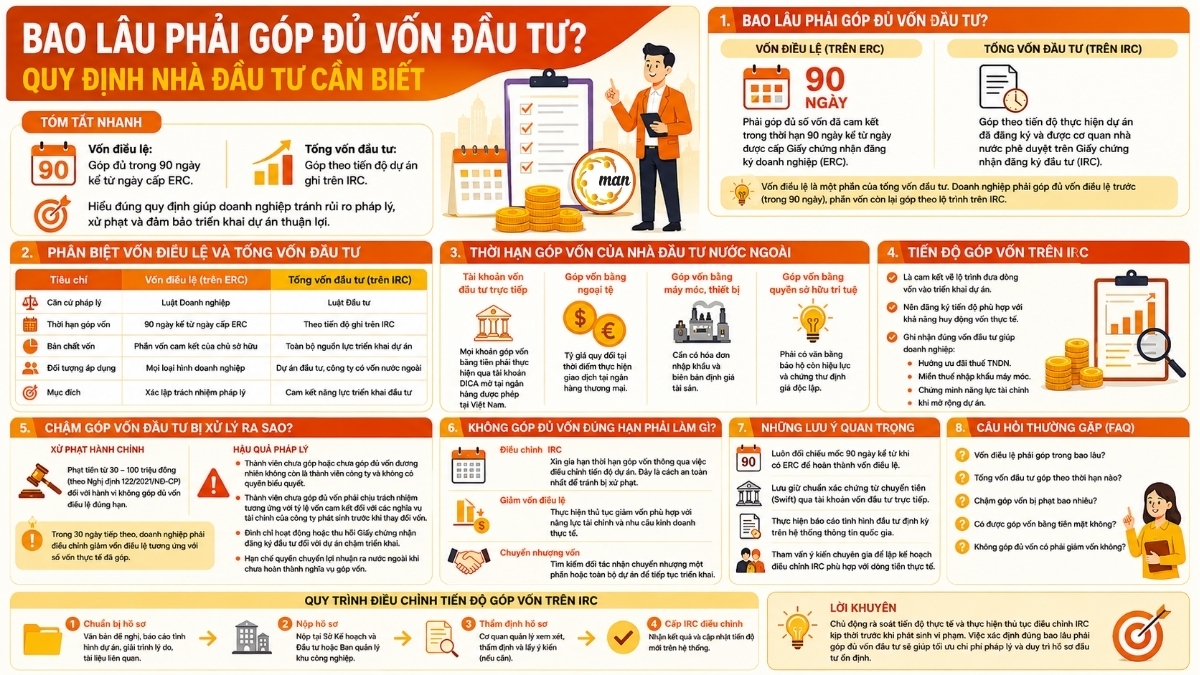
Bao lâu phải góp đủ vốn đầu tư phụ thuộc loại vốn. Vốn điều lệ ghi trên Giấy chứng nhận đăng ký doanh nghiệp (ERC) của công ty TNHH và công ty cổ phần phải góp đủ trong 90 ngày kể từ ngày được cấp ERC theo Luật Doanh nghiệp. Vốn thực hiện dự án ghi trên Giấy chứng nhận đăng ký đầu tư (IRC) được góp theo tiến độ đã đăng ký. Doanh nghiệp không điều chỉnh vốn khi hết hạn có thể bị phạt 30 đến 50 triệu đồng.
Bản cập nhật này đính chính mức phạt (trước đây ghi 30 đến 100 triệu đồng), quy định về công ty hợp danh và tài khoản góp vốn của nhà đầu tư nước ngoài, đồng thời chuyển căn cứ sang Investment Law 2025.
Bao lâu phải góp đủ vốn đầu tư
Doanh nghiệp FDI thường có hai loại mốc thời gian song song: thời hạn góp vốn điều lệ theo pháp luật doanh nghiệp và tiến độ góp vốn thực hiện dự án theo pháp luật đầu tư. Bảng sau giúp phân biệt nhanh.
| Criteria | Registered capital (on ERC) | Vốn thực hiện dự án (trên IRC) |
| Căn cứ | Enterprise Law | Luật Đầu tư 2025 và nội dung IRC |
| Duration | 90 ngày kể từ ngày cấp ERC (công ty TNHH, công ty cổ phần) | Theo tiến độ góp vốn, huy động vốn ghi trên IRC |
| Nature | Vốn chủ sở hữu cam kết góp vào doanh nghiệp | Tổng nguồn lực triển khai dự án, gồm vốn góp và vốn huy động |
| Khi không đúng hạn | Phải điều chỉnh vốn điều lệ trong 30 ngày; không làm có thể bị phạt | Cần điều chỉnh tiến độ dự án trên IRC |
Vốn điều lệ là một phần của vốn thực hiện dự án. Phần vốn góp của nhà đầu tư thường phải đáp ứng cả mốc 90 ngày trên ERC lẫn tiến độ ghi trên IRC, vì vậy hai mốc này cần được lập kế hoạch đồng bộ ngay từ khi xin cấp phép.
90-day deadline for registered capital
According to Enterprise Law, thành viên công ty TNHH hai thành viên trở lên, chủ sở hữu công ty TNHH một thành viên và cổ đông công ty cổ phần phải góp đủ vốn trong 90 ngày kể từ ngày được cấp ERC. Thời hạn này không tính thời gian vận chuyển, nhập khẩu tài sản góp vốn và thực hiện thủ tục hành chính chuyển quyền sở hữu tài sản.
Riêng công ty hợp danh, luật không đặt mốc 90 ngày; thành viên hợp danh và thành viên góp vốn phải góp đủ và đúng hạn số vốn đã cam kết. Bài viết cũ ghi “15 ngày kể từ ngày được Hội đồng thành viên chấp thuận” là không chính xác và đã được bỏ.
Tiến độ góp vốn trên IRC
Với dự án có IRC, nhà đầu tư góp vốn theo tiến độ góp vốn và huy động vốn đã đăng ký. Tiến độ quá ngắn tạo áp lực tài chính, quá dài có thể ảnh hưởng đến cam kết triển khai dự án với địa phương, nên cần dựa trên khả năng huy động vốn thực tế. Ngưỡng sở hữu quyết định doanh nghiệp có phải xin IRC hay không được phân tích tại bài Foreign investors must apply for an IRC (Investment Regulatory Commission) for the amount of capital they contribute..
Góp vốn của nhà đầu tư nước ngoài qua tài khoản nào
Bài viết cũ ghi “mọi khoản vốn góp bằng tiền của nhà đầu tư nước ngoài bắt buộc qua tài khoản vốn đầu tư trực tiếp (DICA)”. Cách hiểu đúng như sau.
- DICA: dùng cho doanh nghiệp thuộc diện thực hiện thủ tục cấp IRC hoặc có nhà đầu tư nước ngoài sở hữu trên 50% vốn điều lệ.
- IICA: nhà đầu tư nước ngoài sở hữu từ 50% trở xuống, doanh nghiệp không thuộc diện cấp IRC thì góp vốn qua tài khoản vốn đầu tư gián tiếp do chính nhà đầu tư mở.
Góp vốn bằng tiền phải chuyển khoản qua đúng loại tài khoản; giao dịch ngoài hệ thống có thể gây khó khăn khi chứng minh vốn góp và chuyển lợi nhuận ra nước ngoài. Ngoài tiền, nhà đầu tư có thể góp bằng máy móc, thiết bị hoặc quyền sở hữu trí tuệ, với hồ sơ định giá tài sản góp vốn theo quy định.
Chậm góp vốn bị xử lý thế nào
Theo điểm a khoản 3 và điểm b khoản 5 Điều 46 Decree 122/2021/ND-CP, doanh nghiệp không thực hiện thủ tục điều chỉnh vốn hoặc thay đổi thành viên, cổ đông sáng lập khi đã kết thúc thời hạn góp vốn và hết thời gian điều chỉnh vốn bị phạt 30 đến 50 triệu đồng và buộc điều chỉnh vốn điều lệ. Mức “30 đến 100 triệu đồng” trong bài cũ là không đúng.
Về hậu quả với thành viên, theo Luật Doanh nghiệp: thành viên công ty TNHH hai thành viên trở lên chưa góp vốn đương nhiên không còn là thành viên; thành viên chưa góp đủ chỉ có quyền tương ứng phần đã góp và phải chịu trách nhiệm tương ứng phần vốn đã cam kết đối với nghĩa vụ tài chính phát sinh trước ngày đăng ký thay đổi vốn điều lệ. Cổ đông công ty cổ phần chưa thanh toán số cổ phần đã đăng ký mua đương nhiên không còn là cổ đông.
Không góp đủ vốn đúng hạn phải làm gì
Khi không thể góp đủ vốn theo cam kết, doanh nghiệp có thể lựa chọn các hướng sau.
- Điều chỉnh vốn điều lệ trong 30 ngày kể từ ngày kết thúc thời hạn góp vốn, thông qua thủ tục thay đổi giấy phép kinh doanh.
- Điều chỉnh tiến độ dự án trên IRC trước khi tiến độ cũ kết thúc, xem Application for amendment of Investment Registration Certificate và dịch vụ Changes to the investment license.
- Chuyển nhượng vốn cho thành viên, cổ đông khác hoặc nhà đầu tư mới để bảo đảm tiến độ.
Lưu ý để tránh vi phạm thời hạn góp vốn
Từ thực tế tư vấn doanh nghiệp FDI, MAN – Master Accountant Network lưu ý một số điểm.
- Ghi lịch mốc 90 ngày từ ngày cấp ERC và mốc 30 ngày điều chỉnh vốn ngay khi thành lập.
- Lưu đầy đủ chứng từ chuyển tiền (SWIFT, sao kê tài khoản DICA hoặc IICA) làm bằng chứng góp vốn.
- Cập nhật số vốn đã thực hiện khi nộp báo cáo giám sát đầu tư định kỳ, bảo đảm khớp với sổ kế toán.
- Không để chênh lệch kéo dài giữa vốn đăng ký và vốn thực góp vì ảnh hưởng đến các thủ tục điều chỉnh, chuyển lợi nhuận sau này.
Conclude
Bao lâu phải góp đủ vốn đầu tư được xác định theo hai mốc: 90 ngày đối với vốn điều lệ trên ERC và tiến độ đăng ký đối với vốn dự án trên IRC. Không điều chỉnh vốn khi hết hạn có thể bị phạt 30 đến 50 triệu đồng, kèm hậu quả về tư cách thành viên, cổ đông. Doanh nghiệp nên lập kế hoạch dòng vốn từ đầu và chủ động điều chỉnh khi cần. Cần hỗ trợ, nhà đầu tư có thể liên hệ MAN.
Professional license: CPA Vietnam Auditors
Experience: Over 30 years of experience in Accounting, Auditing, and Financial Consulting.
Câu hỏi thường gặp về thời hạn góp vốn đầu tư
What is the deadline for FDI companies to contribute their charter capital in full?
Thành viên, chủ sở hữu, cổ đông công ty TNHH và công ty cổ phần phải góp đủ vốn trong 90 ngày kể từ ngày được cấp Giấy chứng nhận đăng ký doanh nghiệp, không kể thời gian vận chuyển, nhập khẩu tài sản góp vốn và thủ tục chuyển quyền sở hữu tài sản, theo Luật Doanh nghiệp.
Không góp đủ vốn điều lệ đúng hạn bị phạt bao nhiêu?
Theo điểm a khoản 3 Điều 46 Nghị định 122/2021/NĐ-CP, doanh nghiệp không thực hiện thủ tục điều chỉnh vốn hoặc thay đổi thành viên, cổ đông sáng lập khi đã hết thời hạn góp vốn và thời gian điều chỉnh vốn bị phạt 30 đến 50 triệu đồng, kèm biện pháp buộc điều chỉnh vốn.
If the registered capital is not fully contributed on time, will the capital be reduced?
Có. Trong 30 ngày kể từ ngày kết thúc thời hạn phải góp đủ vốn, công ty phải đăng ký điều chỉnh vốn điều lệ, tỷ lệ phần vốn góp bằng số vốn đã góp theo quy định của Luật Doanh nghiệp (công ty cổ phần được trừ trường hợp số cổ phần chưa thanh toán đã được bán hết trong thời hạn này).
Có thể gia hạn tiến độ góp vốn đầu tư trên IRC không?
Có thể, bằng thủ tục điều chỉnh tiến độ thực hiện dự án trên Giấy chứng nhận đăng ký đầu tư. Doanh nghiệp nên làm thủ tục trước khi tiến độ cũ kết thúc để tránh rủi ro vi phạm.
Nhà đầu tư nước ngoài góp vốn qua tài khoản nào?
Doanh nghiệp thuộc diện cấp IRC hoặc có nhà đầu tư nước ngoài sở hữu trên 50% vốn điều lệ dùng tài khoản vốn đầu tư trực tiếp (DICA). Nếu nhà đầu tư nước ngoài sở hữu từ 50% trở xuống và doanh nghiệp không thuộc diện cấp IRC, nhà đầu tư góp vốn qua tài khoản vốn đầu tư gián tiếp (IICA) của mình.