



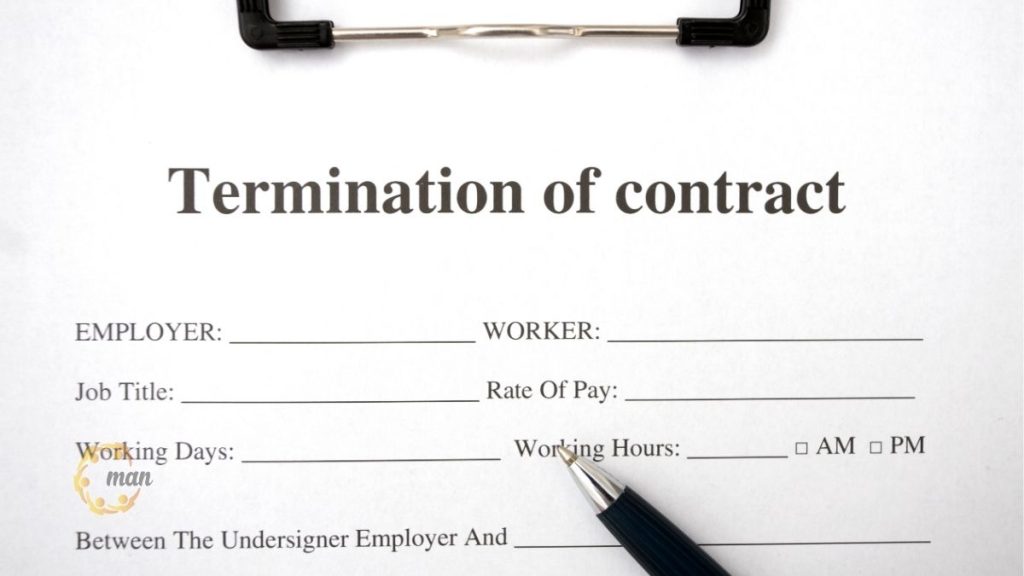
Article 36 of the 2019 Labor Code The regulations detail the circumstances under which employers have the right to unilaterally terminate employment contracts. Understanding these legal grounds not only helps businesses manage their human resources legally but also helps employees identify violations of their rights, thereby enabling them to protect themselves in actual labor disputes.
Overview of Article 36 of the 2019 Labor Code in labor relations

In the structure of current labor law, Article 36 plays a crucial role in balancing the rights of all parties. It is considered a legal tool that allows employers to proactively adjust their workforce when employees fail to meet professional requirements or when the business faces force majeure situations. However, this power is not unlimited and is constrained by strict conditions regarding reasons and notification procedures to prevent abuse of power and harm to the lives of employees.
On the network MAN – Master Accountant Network, We believe that standardizing human resource processes in accordance with Article 36 of the 2019 Labor Code is a crucial step for organizations to optimize management and minimize legal risks related to contract compensation.
Cases in which businesses can unilaterally terminate contracts.
Based on Clause 1, Article 36 of the 2019 Labor Code, employers are only permitted to unilaterally terminate labor contracts in one of the following specific cases:
- Employees often fail to meet the performance evaluation criteria specified in the company's regulations. These regulations need to be reviewed by the employee representative organization at the workplace, in accordance with the spirit of Article 36 of the 2019 Labor Code.
- Workers who have been ill or injured and have undergone prolonged treatment but whose ability to work has not yet recovered are considered to have been laid off. This period is calculated as 12 consecutive months for indefinite-term contracts or 6 consecutive months for fixed-term contracts of 12 to 36 months, based on the milestones stipulated in Article 36 of the 2019 Labor Code.
- Businesses must scale back production, operations, or reduce jobs due to objective factors such as natural disasters, fires, dangerous epidemics, acts of war, or at the request of competent state authorities, after exhausting all remedial measures.
- Employees who have reached the retirement age stipulated by law, unless there is a different agreement between the two parties regarding continued employment, outside of the grounds specified in Article 36 of the 2019 Labor Code.
- Workers who provide false personal information such as full name, date of birth, gender, place of residence, educational qualifications, professional skills, or health status at the time of contract signing, affecting the hiring decision. For businesses employing foreign workers, a review is necessary. work permit This is also an important part of ensuring the integrity of the record.
Cases where termination of employment contract does not require prior notice.
Besides the reasons requiring preparation time, Article 36 of the 2019 Labor Code also allows employers to terminate employment relationships immediately in situations of serious disciplinary violations or unjustified absence.
Specifically, businesses are not obligated to give employees advance notice in the following situations:
- An employee is absent from the workplace for 15 days after the expiration of the temporary suspension of the labor contract without a different agreement as stipulated in Article 36 of the 2019 Labor Code.
- Employees who voluntarily abandon their jobs without justifiable reason for 5 consecutive working days or more are considered to have legitimate reasons. Reasons considered legitimate typically include natural disasters, fires, or illness of the employee or a family member with confirmation from a medical facility, as guided by Article 36 of the 2019 Labor Code.
The notice period is stipulated in Article 36 of the 2019 Labor Code.
To ensure employees have time to prepare and settle into their new lives, employers must strictly adhere to their notice obligations. Violating this deadline may result in the termination of the contract being declared invalid.
Below is a detailed table of the minimum notice periods corresponding to each type of employment contract:
| Type of employment contract | Minimum notice period |
|---|---|
| Indefinite-term employment contract | At least 45 days |
| Fixed-term employment contracts range from 12 to 36 months. | At least 30 days |
| Fixed-term employment contracts of less than 12 months | At least 3 working days |
| In cases where an employee's illness lasts beyond the prescribed time limit. | At least 3 working days |
It should be noted that for certain professions with specific characteristics, such as business management or flight crew members, the notice period will be applied according to separate government regulations in addition to Article 36 of the 2019 Labor Code.
Handling violations of Article 36 of the 2019 Labor Code

When employees realize that a termination decision is not legally justified or violates the notice period, they should take steps to protect their rights in a professional manner:
- Initial negotiation and complaintSubmit a complaint directly to the company's leadership to request dialogue regarding compensation or reinstatement of employment, in accordance with Article 36 of the 2019 Labor Code.
- Second appealIn case the initial resolution is unsatisfactory, the employee shall submit the dossier to the Chief Inspector of the Department of Labor, War Invalids and Social Affairs in accordance with the prescribed procedure. Decree 24/2018/ND-CP and Article 36 of the 2019 Labor Code.
- Filing a lawsuit for a labor dispute.Employees have the right to file a lawsuit directly with the District People's Court where the enterprise is headquartered to request a ruling on the legality of the decision to terminate the contract based on: Labor Code 2019.
According to advice from experts at MAN – Master Accountant Network, businesses should proactively review their personnel records periodically to ensure that all contract termination procedures have sufficient legal evidence based on Article 36 of the 2019 Labor Code, avoiding prolonged litigation that could affect brand reputation.
Frequently Asked Questions about Article 36 of the 2019 Labor Code
To help our readers gain a deeper understanding of how the law operates in practice, we have compiled frequently asked questions related to the right to unilaterally terminate a contract.
Is it permissible to terminate an employee's contract if they consistently fail to meet job requirements?
What is the notice period for a 24-month fixed-term employment contract?
How long after an employee voluntarily quits can a company terminate their contract immediately?
Can a company terminate an employee's contract while the employee is sick?
What should you do when a company unilaterally terminates an employment contract illegally?
Conclude
The correct application of Article 36 of the 2019 Labor Code plays a crucial role in maintaining the stability of labor relations and minimizing legal risks for both parties. Both businesses and employees need to uphold the rule of law to build a sustainable and fair working environment.
Contact information for MAN – Master Accountant Network
- Address: 19A, 43rd Street, Tan Thuan Ward, Ho Chi Minh City
- Mobile/Zalo: 0903 963 163 – 0903 428 622
- Email: man@man.net.vn
Content production is overseen by: Mr. Le Hoang Tuyen – Founder & CEO of MAN – Master Accountant Network, CPA Vietnam auditors with over 30 years of experience in accounting, auditing, and financial consulting.